In short: involuntary outing is not the same situation as blackmail. In blackmail, someone threatens to talk and wants something from you: there is still a negotiation, and therefore some room to manoeuvre. With outing, it has already happened — a screenshot is circulating in a class group chat, a cousin recognised your face, a colleague "heard about it". There is nothing left to prevent: you have to contain the spread, document everything, and take back control of the narrative before others write it for you. This guide describes the first 72 hours, the legal levers genuinely available in France and Belgium, what you can ask of a platform or a search engine, and how to approach family, school or an employer when you never chose the timing.
This article describes public procedures and legal provisions. It does not constitute personalised legal advice. If you are in immediate danger, call 17 (police emergency) or 112. To talk to someone: the SOS homophobie helpline (01 48 06 42 41) and 3018 (digital violence, free by phone and chat).
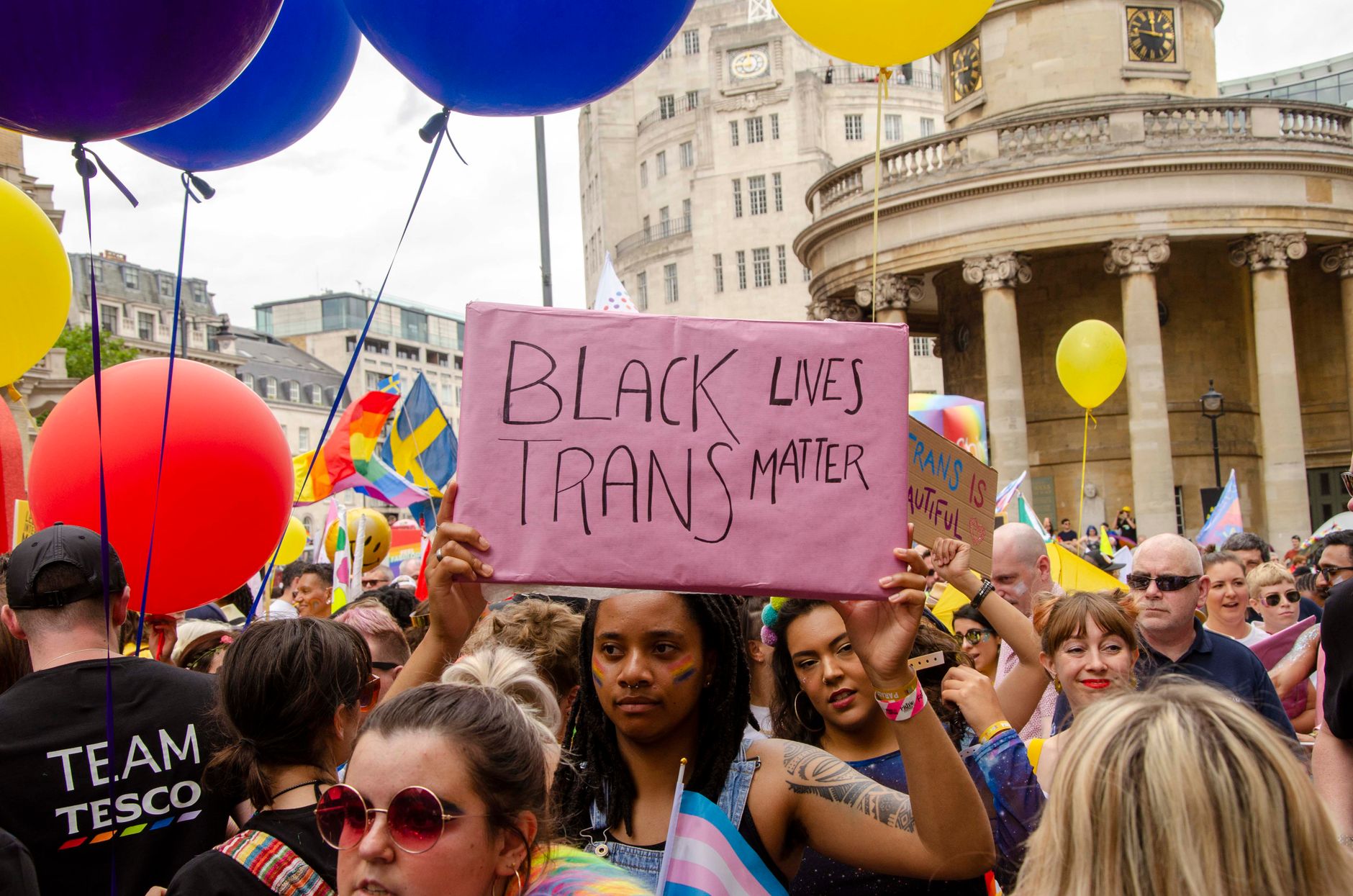
What makes involuntary outing specific
The word "outing" refers to the disclosure of a person's sexual orientation or gender identity by a third party and without their consent. When it stems from a video chat, it almost always takes one of three forms:
- the screenshot or recording: your face, sometimes your voice, extracted from an exchange on a platform for men, then recirculated out of context;
- chance recognition: a stranger you were randomly matched with turns out to be a neighbour, a classmate, a colleague — and they talk;
- the leak by cross-referencing: a username, a tattoo, a poster visible in the background, a linked account allow someone to connect a session to your legal identity.
These three forms share one consequence: you lose control of the timing. And the research on coming out all stresses this point — it is not the information in itself that does the most psychological damage, it is not having chosen to whom, when and how. French helpline organisations have long described this loss of control as a major factor in distress, sometimes harder to bear than the reactions actually received.
Two useful clarifications before we go further:
- You have done nothing illegal. In France, Belgium, Italy and the Netherlands, video chatting between consenting adults is not an offence. The person who recorded and shared the material, on the other hand, has probably committed one.
- The spread is not irreversible in its effects. A screenshot never disappears entirely from the internet, but its findability and its credibility can be worked on. That is precisely the ground you fight on in the first 72 hours.
If the situation still involves an active threat — "send me money or I'll publish" — then you are not in this scenario but in a blackmail situation: the method is different and set out in our guide on homophobic entrapment and blackmail arising from a video chat.
The first 72 hours: contain, don't convince
Hour 0 to 2: steady yourself before acting
The first instinct, almost universally, is to message everyone to deny, explain or plead. This is the worst possible moment to do it: a message sent in shock becomes, itself, another piece of material in circulation.
Put the phone down. Tell one single person you trust — a friend who already knows, a brother, a sister, an ally at work — and tell them precisely what you need (to be with you, to answer a group chat on your behalf, to put you up for a night). Helplines exist for exactly this: SOS homophobie, 3018 for digital violence, Le Refuge (06 31 59 69 50) if your housing or your safety within the family is at stake.
Hour 2 to 12: document before it vanishes
The paradox of outing: the evidence often evaporates faster than the rumour. Stories expire, groups are deleted, perpetrators erase things.
Build a file, in this order:
| What to capture | Why it matters |
|---|---|
| The post or message, in full, with the username, date and time visible | Identifies the author and establishes the timeline |
| The full URL of every instance | Essential for reports and delisting requests |
| The group's name, its number of members, the list if visible | Measures how far it has spread |
| Messages received (insults, mockery, threats) | May constitute separate offences |
| Any traces of the original conversation | Shows the private context of the misused content |
Two practical precautions. First, export everything off your phone: if the device is confiscated, lost or inspected by someone close to you, you lose the file. An encrypted USB stick, kept somewhere other than your everyday bag, does the job very well. Second, if one of the instances is a live or ephemeral video, film the screen: the method is better than nothing. We set out the format expected by platforms and investigating services in the article on reporting, blocking and preserving evidence.
Hour 12 to 48: getting it taken down
Three channels, to be activated in parallel rather than one after the other.
1. The platforms. Since the European Digital Services Act (DSA) came into force, every online service accessible in the EU must provide an accessible reporting mechanism, acknowledge receipt and give reasons for its decision. Pick the right categories: "non-consensual sharing of images", "harassment", "hate speech" — not "content I don't like". State explicitly that the content reveals sensitive data within the meaning of Article 9 of the GDPR: sexual orientation enjoys reinforced protection, and that argument carries weight.
2. Search engines. If your name comes up in the results, the right to delisting ("right to be forgotten", established by the CJEU in 2014 and governed by Article 17 of the GDPR) allows you to request the removal of a link associated with your identity. The form is free. If refused, the CNIL can be petitioned via an online complaint.
3. 3018. The French platform dedicated to digital violence against minors and young adults has fast-track channels with the major social networks: content reported by them is taken down within hours where an individual report can drag on for days. It is free, confidential, and accessible via app or chat.
Hour 48 to 72: reclaiming the narrative
You will not stop the conversation from happening. You can decide what it contains.
Prepare one short sentence, the same for everyone, that you can repeat without having to think about it: "Yes, I'm gay. What bothers me is that someone shared a private video without my consent, and that's illegal." That formulation does three things at once: it kills the rumour, it shifts the blame onto its author, and it saves you from having to improvise ten different versions.
Do not apologise for anything. Do not go into intimate detail: you do not have to describe a private exchange to prove anything. And accept the idea that some people will react badly at first and differently six months later — the case notes of support organisations are full of families who came round after an initial rejection.
What the law actually says
Outing has no standalone offence under French law, but the acts that accompany it can almost always be legally characterised.
| Act | Legal basis | Penalty incurred (France) |
|---|---|---|
| Sharing the image or words of a person captured in a private place without their consent | Arts. 226-1 and 226-2 of the Criminal Code | 1 year's imprisonment and a €45,000 fine |
| Sharing sexual content without consent | Art. 226-2-1 | 2 years and €60,000 |
| Threatening to publish in order to obtain money or an act | Blackmail, Art. 312-10 | 5 years and €75,000 |
| Repeated messages affecting a person's living conditions | Moral / online harassment, Art. 222-33-2-2 | up to 3 years, aggravated if homophobic motive |
| Insult or incitement to hatred on grounds of sexual orientation | Act of 29 July 1881, Art. 33 | fine, aggravating circumstance applied |
| Unlawful processing of data revealing sexual orientation | Art. 226-19; Art. 9 GDPR | 5 years and €300,000 |
Key point: a homophobic motive is a general aggravating circumstance under the Act of 18 March 2003, extended and strengthened since. Say so explicitly when filing your complaint, and ask for it to be recorded in the official statement — that is often what changes the legal characterisation.
In Belgium, the Act of 10 May 2007 (the anti-discrimination act) and the 2020 "Marcourt" act on the non-consensual sharing of intimate images provide equivalent grounds; the Unia institute receives discrimination reports. In the Netherlands, Article 139h of the Criminal Code covers the sharing of intimate images. In Italy, Article 612-ter of the Criminal Code, introduced in 2019, criminalises diffusione illecita di immagini. In all three countries, a complaint can be filed even if the perpetrator is unknown or abroad.
A word on contexts where the law works against you: if you are in Turkey or in a Maghreb country, the logic of this guide changes radically, because filing a complaint may expose you. Our features on Turkey and on Algeria, Tunisia and Morocco explain how to weigh up the options.
School, work, family: three arenas, three methods
At school or university
The institution has a duty to protect you. Request a meeting in writing (a simple dated email will do) with the head of pastoral care, the head of the institution or the student services office, setting out the facts, the dates and the reports already made. Every education authority has a designated anti-bullying contact; the pHARe programme provides for support protocols. Do not ask for an informal arrangement: ask for a written record.
At work
Under Article L. 4121-1 of the Labour Code, the employer is required to protect the physical and mental health of its employees, and Article L. 1132-1 prohibits any discrimination based on sexual orientation. Contact the designated harassment officer, the works council (CSE), or the labour inspectorate. The Défenseur des droits can be petitioned free of charge online and its investigation is often quicker than employment tribunal proceedings.
You are never obliged to confirm or deny anything to a manager: your orientation has no bearing on the employment relationship. The only legitimate question is that of the content shared and who shared it.
With family
This is the most unpredictable arena, and the only one where procedural logic is of no use. Three useful markers:
- Have a fallback plan before the conversation if you live with your parents and there is a risk of being thrown out. Le Refuge and the Le Refuge endowment fund provide housing for LGBTQ+ young people turned out of home.
- Leave documentation rather than arguments. Parents' organisations — Contact, which puts families in touch with one another — are often more effective than you in the first few weeks. A book on supporting an LGBT child, left on a table, says more than an hour of tense discussion.
- Do not impose a timetable on people you do not want to talk to. Being outed does not oblige you to come out fully to the entire family.
And afterwards: reducing your exposure going forward
Once the crisis has passed, the issue becomes reducing future risk. Three areas of work, in order of real effectiveness.
The background and your face. A screenshot is only dangerous if it is identifiable. A neutral wall, lighting that doesn't reveal the room, no family photos or framed diplomas behind you: that is the best investment in discretion you can make. A foldable webcam backdrop solves the problem in ten seconds and stores flat. We have detailed everything a background gives away in the article devoted to your setting on random video chat.
The hardware. A sliding webcam cover prevents accidental activations. A wired headset with a microphone ensures your voice doesn't carry through a shared flat. And if you read a lot on a screen at night, blue-light filtering glasses at least reduce the strain of endless late-night sessions monitoring what is circulating.
Compartmentalisation. Distinct usernames, a dedicated email address, never reusing a profile picture from one service to another, no contact syncing. That is the core of our discretion guide for people who aren't out yet, and it is also what structurally distinguishes an account-free video chat from a dating app, a comparison we documented in what each model exposes about you.
Takeaways
- Outing is a loss of control over the timing, not a fault on your part.
- Document everything in the first twelve hours: evidence disappears faster than rumour.
- Report in parallel to the platform (DSA), the search engine (GDPR delisting) and 3018.
- One single sentence, repeated to everyone, is worth more than ten explanations.
- A homophobic motive is an aggravating circumstance: have it written into the official statement.
- Call a helpline on day one, not day ten.
For the underlying habits, this site's safety page gathers the measures worth knowing before an incident happens, and our feature on the figures on online homophobia in 2026 puts these situations in their statistical context: you are far from alone in experiencing them.